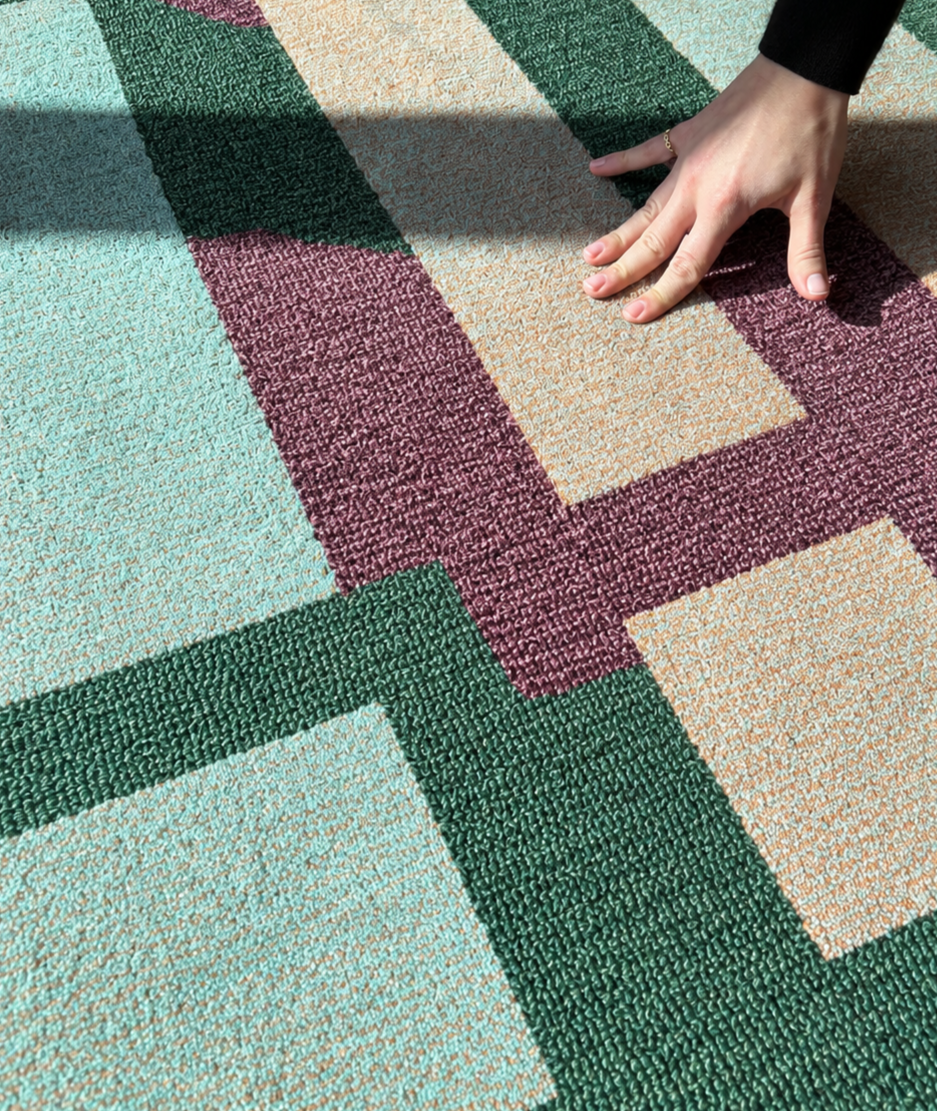
Nature Reclaims the Grid: The Story Behind Langlands’ Bespoke Carpet
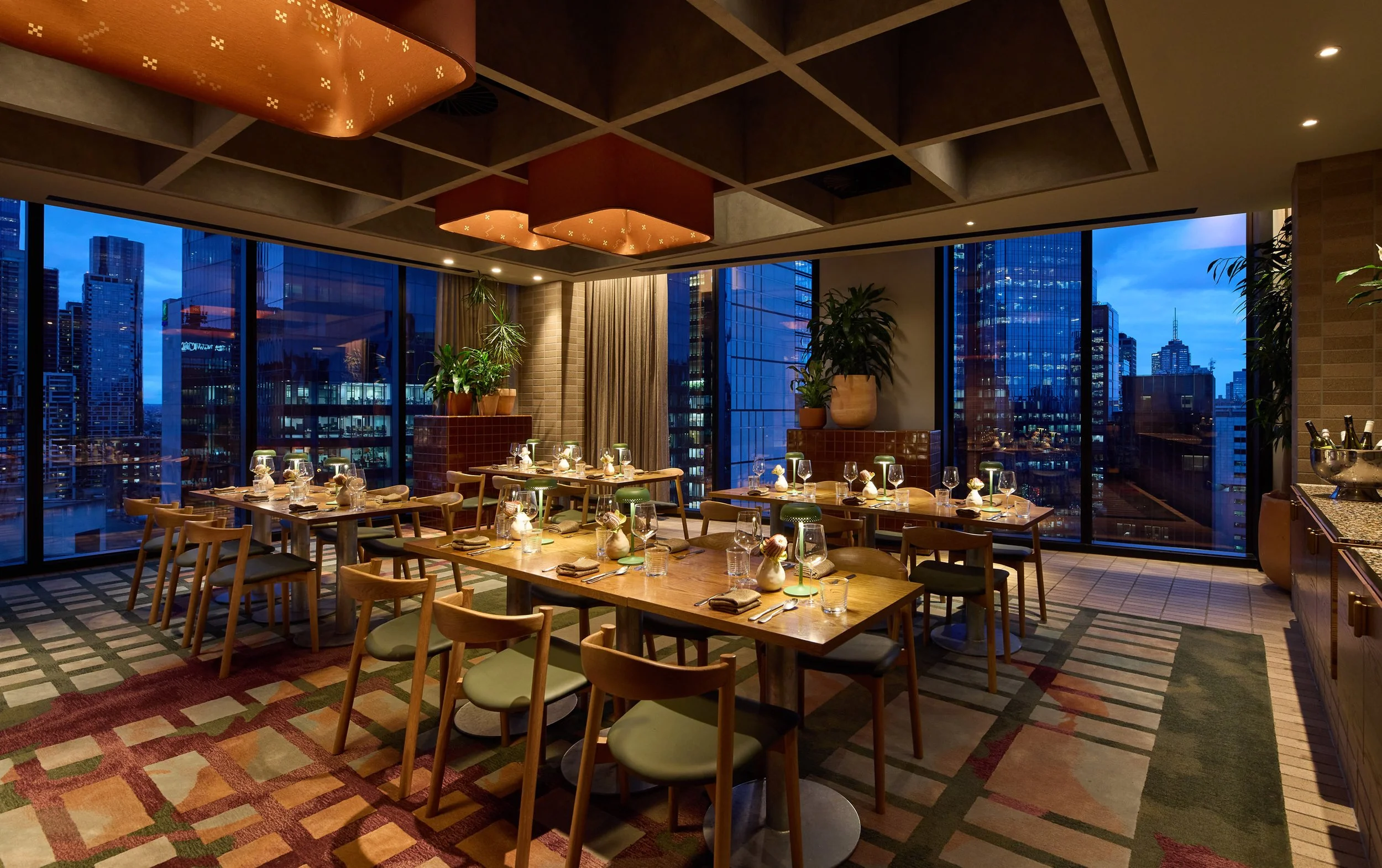
Photography courtesy of Hyatt Centric Melbourne.
At the centre of Langlands’ Conservatory is a bespoke carpet designed by NUMI Collective director Nancy Nguyen. It is more than a finishing touch. The carpet carries one of the project’s central ideas: nature finding its way back into the city.
The starting point was Melbourne itself.
Langlands’ existing interior drew on the city’s industrial character, with warehouse-like architecture, galvanised steel, concrete and a restrained palette. NUMI wanted to retain that sense of structure while introducing something softer and more organic.
Nancy looked to the way wildflowers and weeds appear in unexpected places — through cracks in pavements, along laneways and at the edges of the city grid. The carpet became an interpretation of that quiet, persistent growth.
“The carpet represents nature gently reclaiming urban space, bringing colour, softness and life to an otherwise ordered environment,” Nancy explains.
The Melbourne CBD grid forms the basis of the pattern, but it is not reproduced literally. Instead, it is translated through line, scale and movement. Major thoroughfares such as Swanston Street appear as broader, more prominent lines, while smaller streets are represented through finer elements.
Across this framework, oversized floral forms push through the geometry.
The effect is deliberately unsettled. The order of the city is still there, but it has been interrupted by something looser and more instinctive. The pattern suggests growth, movement and regeneration without becoming overly literal.
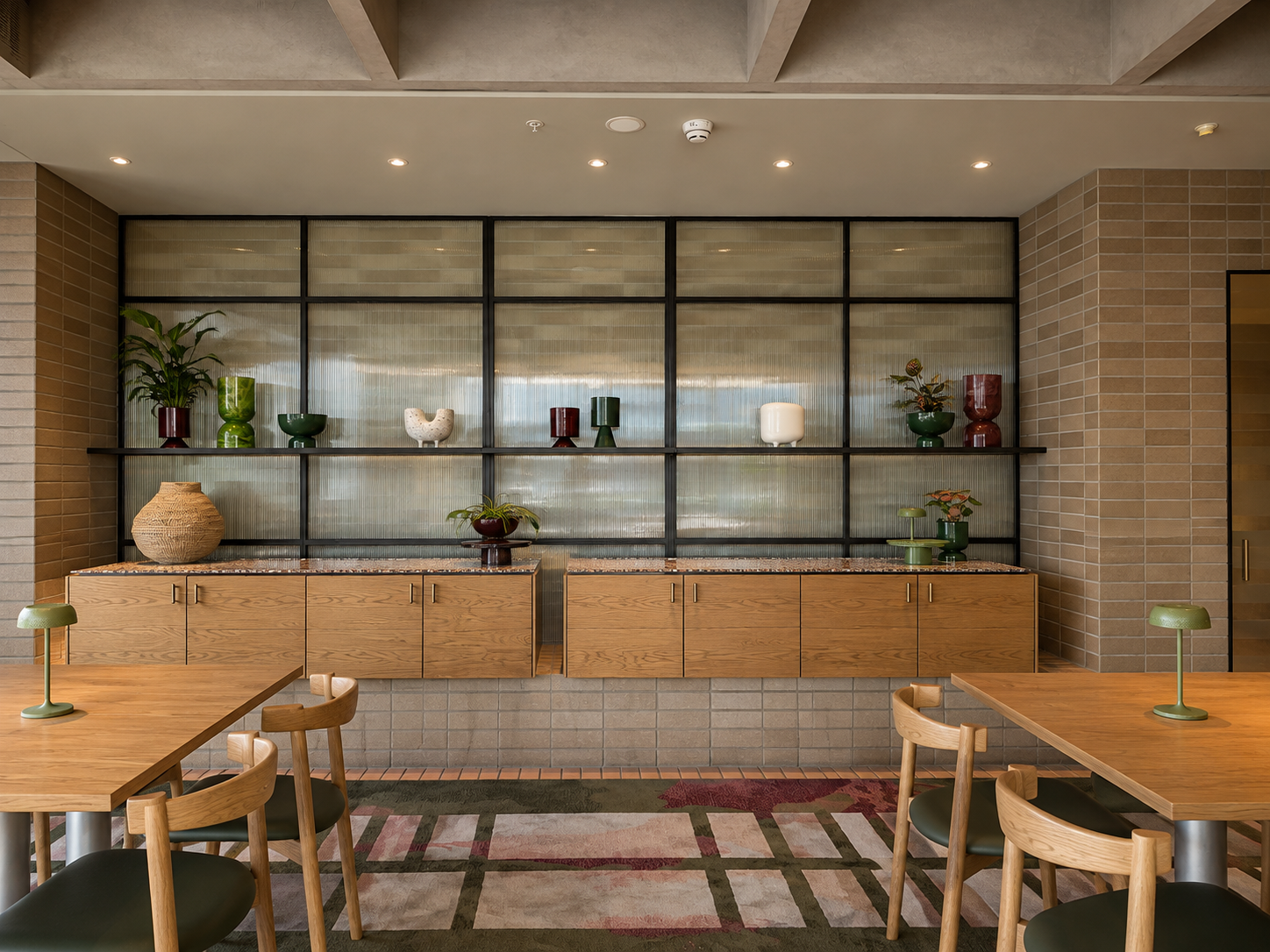
Designing From the Architecture Out
The design process began with the Conservatory itself.
The room is highly structured, with strong rectilinear forms and a relatively restrained material palette. The carpet needed to soften the space without competing with the architecture or becoming another dominant feature.
Several compositions were developed to test the relationship between the city grid and the floral forms. Scale, texture, colour and repetition were considered from different viewpoints, including how the pattern would be experienced from a table rather than seen only from above.
The floral elements were intentionally enlarged, allowing parts of the pattern to appear between tables and chairs. Instead of reading as one continuous graphic, the carpet reveals itself gradually as guests move through the room.
Its colour palette was drawn from the existing interior, including the tones of the tiled plinth used throughout Langlands. This helped the carpet feel integrated into the restaurant rather than added as a separate statement.
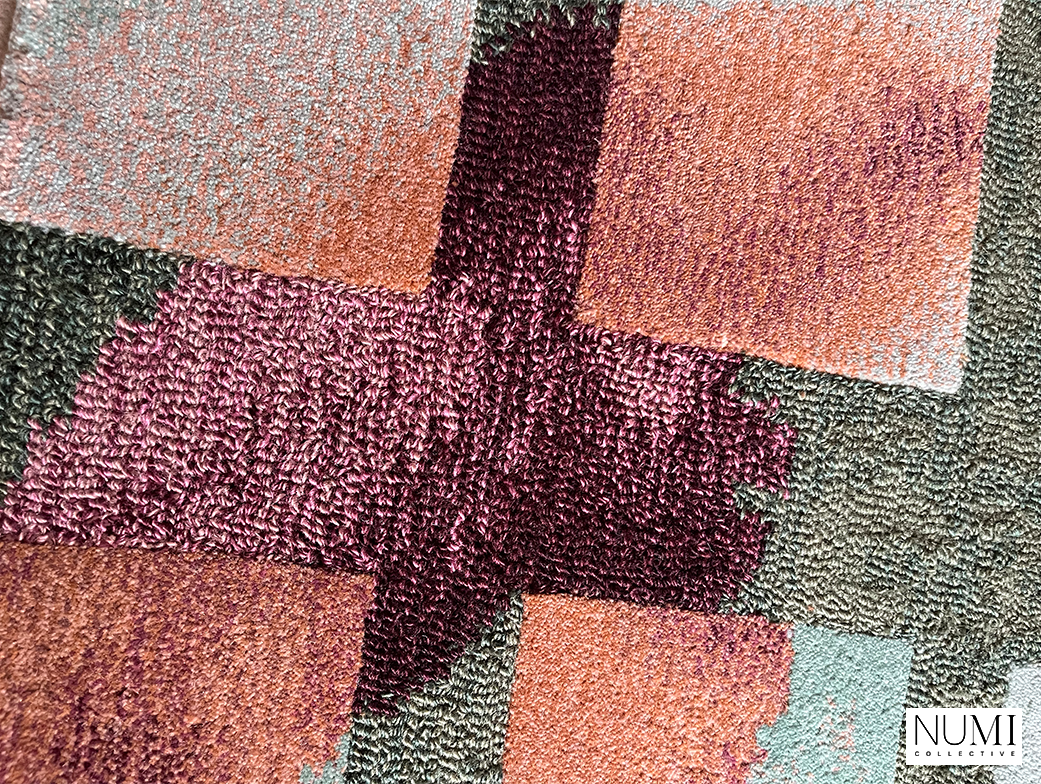
From Concept to Craft
Turning the design into a finished hospitality carpet required as much practical consideration as creative development.
The pattern needed to work within a high-traffic environment, with colour, texture and density carefully balanced for durability and maintenance. Areas of single-tone colour were limited to help disguise wear and staining, while the layered pattern was refined to remain clear without becoming visually busy.
The relationship between the carpet, the room’s geometry and accessibility was also considered throughout the process.
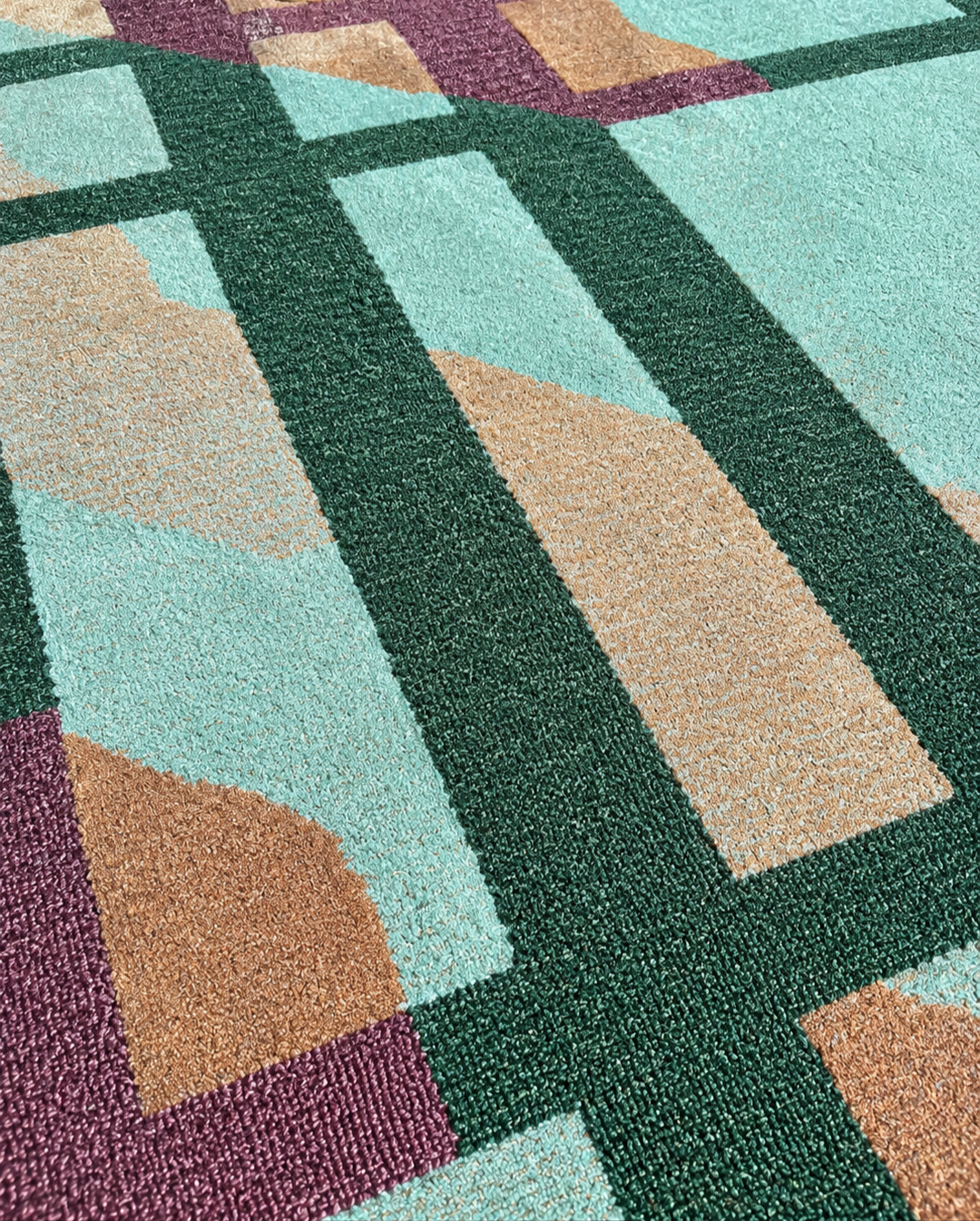
After several rounds of development and sampling, NUMI arrived at a design that retained the depth of the original concept while meeting the demands of the space.
The finished carpet changes the atmosphere of the Conservatory. It brings warmth and softness to a room that could otherwise feel quite hard and industrial, while also helping to absorb sound and ground the furniture and lighting above.
For Nancy, the carpet is not only an image of the city, but of the life that moves through it.
“If the architecture represents the framework of the city, then the carpet represents the life that inhabits it.”
That distinction is what gives the design its character. It takes something specific to Melbourne — the grid, the streets, the unexpected growth at its edges—and turns it into an experience that sits beneath every guest who enters the room.